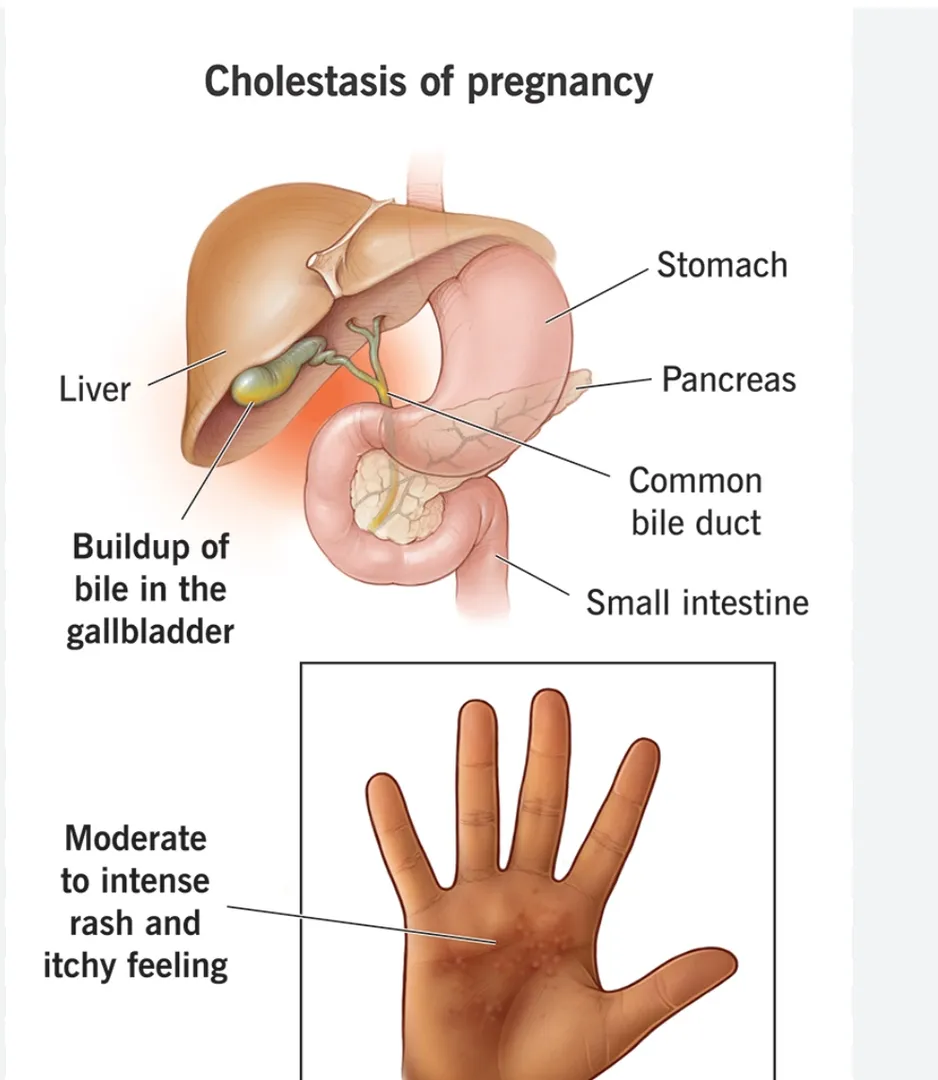
Pregnancy-induced cholestasis (more commonly called intrahepatic cholestasis of pregnancy, ICP) is a liver condition that happens during pregnancy, usually in the third trimester. It can sound scary, so here’s a clear, no-fluff breakdown.
What it is
ICP happens when pregnancy hormones slow the normal flow of bile from the liver. Bile acids then build up in the blood instead of flowing into the digestive system.
Main symptom
Intense itching (often the first and biggest sign)
Typically no rash
Worse at night
Commonly affects palms of the hands and soles of the feet, but can be all over
Other possible symptoms
Dark urine
Pale stools
Fatigue
Mild jaundice (yellowing of skin/eyes – less common)
Why it matters
For the mother: uncomfortable but usually resolves after delivery
For the baby: increased risk of complications, especially if bile acids are high (preterm birth, fetal distress), which is why close monitoring is important
How it’s diagnosed
Blood tests, mainly:
Elevated serum bile acids
Abnormal liver function tests (ALT, AST)
Treatment & management
Ursodeoxycholic acid (UDCA) – helps reduce bile acids and itching
Regular blood tests
Close fetal monitoring
Doctors often recommend early delivery (commonly around 37–38 weeks, depending on bile acid levels)
After delivery
Symptoms usually disappear within days to weeks
Liver tests return to normal
Important to recheck labs postpartum
Higher chance of recurrence in future pregnancies
If you’re asking because you or someone close to you has symptoms, don’t ignore itching—especially without a rash. It’s absolutely worth getting checked.
Keywords