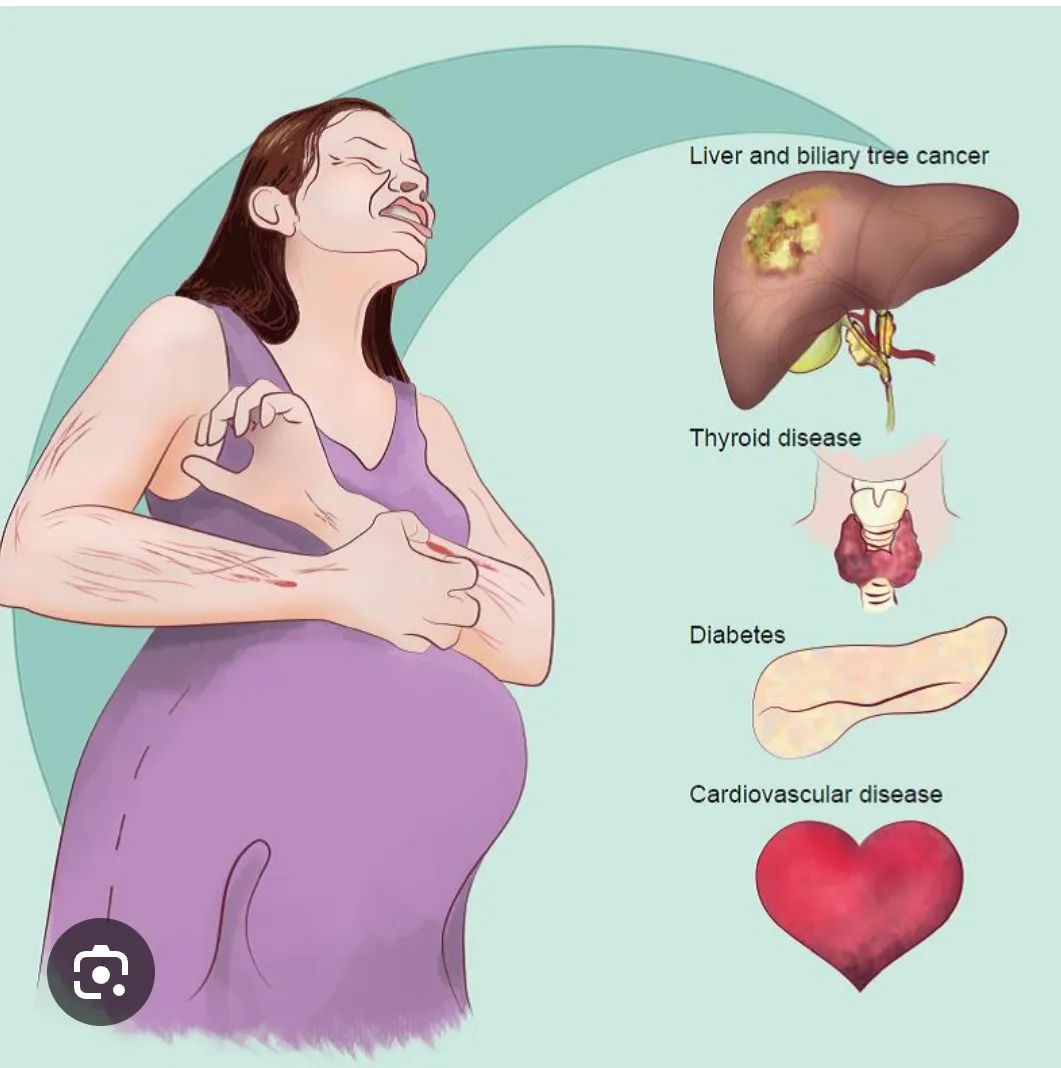
Intrahepatic Cholestasis of Pregnancy (ICP)—also called obstetric cholestasis—is a liver condition that occurs during pregnancy and causes a build-up of bile acids in the bloodstream.
⭐ Key Features
1. When it occurs
Typically in the third trimester, though it can start earlier.
2. Main symptoms
Severe itching, especially on palms of hands and soles of feet
(usually worse at night)
Dark urine
Pale stools
Jaundice (less common)
⭐ Why it happens
Hormonal changes during pregnancy can slow or block bile flow from the liver. Bile acids then accumulate in the bloodstream, leading to maternal symptoms and potential fetal risks.
⭐ Diagnosis
ICP is diagnosed based on:
Elevated total bile acids (generally 10 μmol/L)
Liver function tests may show elevated ALT/AST
Other causes of liver disease must be ruled out
⭐ Risks
For the mother
Severe itching
Mild liver dysfunction (resolves after birth)
For the baby
Preterm birth (spontaneous or planned)
Meconium-stained amniotic fluid
Fetal distress
Rare but serious risk of stillbirth, especially if bile acids are very high (100 μmol/L)
⭐ Treatment
Ursodeoxycholic acid (UDCA) → helps lower bile acids and relieves itching
Topical soothing agents (e.g., menthol creams)
Antihistamines may help with sleep
Regular monitoring:
Weekly or biweekly liver tests and bile acids
Fetal surveillance (if indicated)
⭐ Delivery planning
Many guidelines recommend planned delivery around 36–37 weeks, especially if bile acids are significantly elevated, to reduce stillbirth risk.
⭐ After birth
Symptoms usually resolve within days to weeks
Follow-up liver tests to ensure normalization
High chance of recurrence in future pregnancies (45–90%)
Keywords