Urinary tract infections (UTIs) are common during pregnancy and can pose significant risks if not identified and treated promptly. Here’s a concise overview of UTIs in pregnancy and the potential complications:
⚠️ Why UTIs Are More Common in Pregnancy
During pregnancy, hormonal and physical changes increase the risk of UTIs:
Progesterone relaxes the muscles of the urinary tract, leading to urinary stasis.
The growing uterus can compress the bladder and ureters, further slowing urine flow.
Glycosuria (glucose in urine) is more common, promoting bacterial growth.
Immune suppression during pregnancy may reduce the body’s ability to fight infections.
💡 Types of UTIs in Pregnancy
Asymptomatic bacteriuria
Bacteria in urine without symptoms
Occurs in 2–10% of pregnant women
If untreated, up to 30% develop pyelonephritis
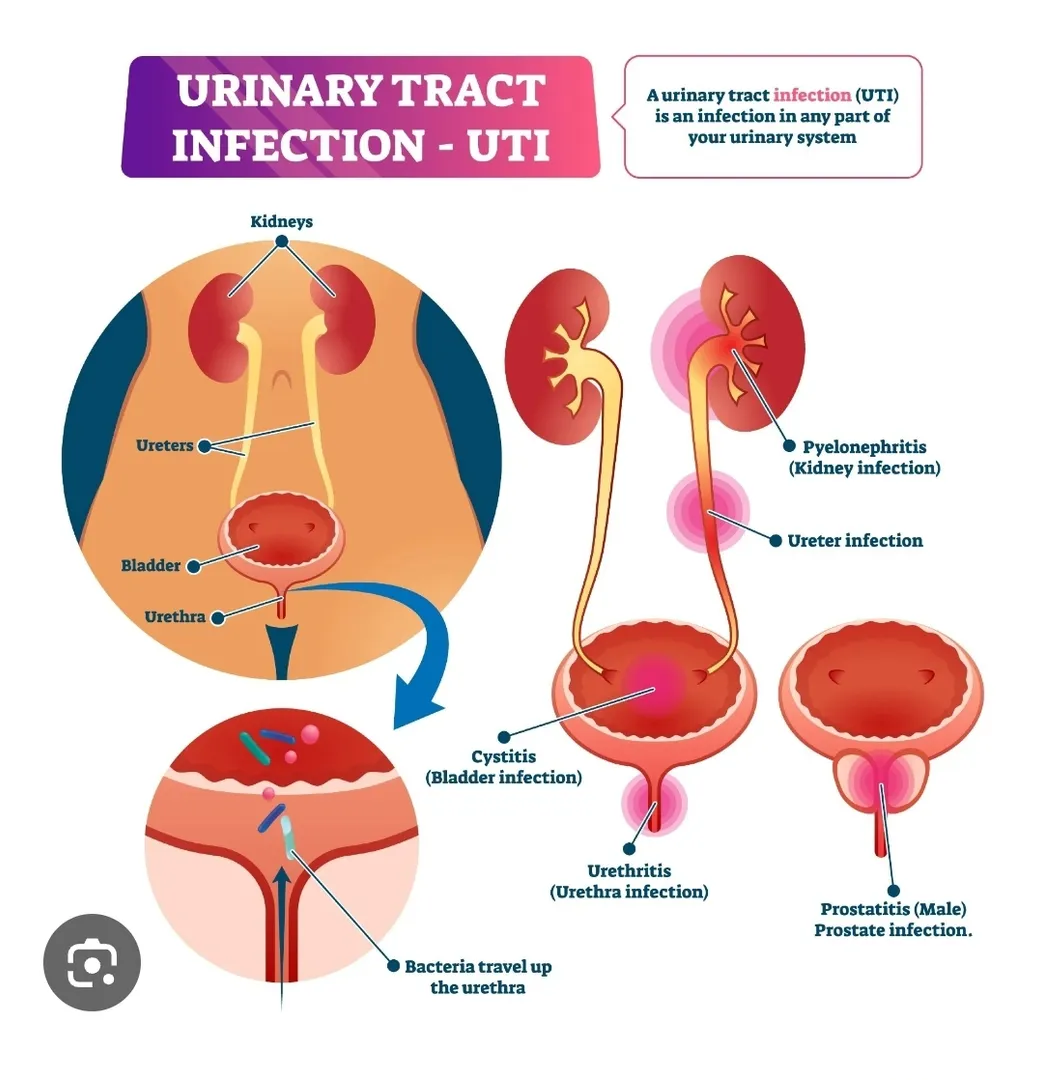
Cystitis (Bladder infection)
Symptoms: dysuria, frequency, urgency, suprapubic pain, no fever
Pyelonephritis (Kidney infection)
Severe form with fever, chills, flank pain, nausea/vomiting, and systemic illness
🔬 Diagnosis
Urine culture: Gold standard (clean-catch midstream specimen)
Urinalysis: Leukocyte esterase, nitrites, WBCs, bacteria
💊 Treatment
Antibiotics considered safe in pregnancy:
Nitrofurantoin (avoid in 1st trimester and near term)
Amoxicillin-clavulanate
Cephalexin
Fosfomycin (single-dose)
Note: Avoid fluoroquinolones and tetracyclines due to fetal risks.
Duration:
3–7 days for uncomplicated infections
Hospitalization and IV antibiotics for pyelonephritis
🚨 Complications of UTI in Pregnancy
If untreated or poorly managed, UTIs can lead to serious maternal and fetal outcomes:
Maternal complications:
Acute pyelonephritis
Sepsis
Acute respiratory distress syndrome (ARDS)
Renal dysfunction
Preterm labor
Fetal complications:
Low birth weight
Preterm birth
Intrauterine growth restriction (IUGR)
Stillbirth (rare)
Neonatal infection
✅ Prevention
Routine urine culture screening in early pregnancy (first prenatal visit)
Treat asymptomatic bacteriuria
Encourage hydration and frequent urination
Proper perineal hygiene
Keywords