During pregnancy, a woman's body undergoes major cardiovascular changes to support the growing fetus. These changes are normal and necessary, and they affect almost every aspect of heart function.
Here's a breakdown of the key changes in heart function during pregnancy:
🫀 1. Increased Cardiac Output
What it means: The amount of blood the heart pumps per minute increases.
How much: Increases by 30–50%, peaking around mid-pregnancy (20–24 weeks).
Why: To supply extra oxygen and nutrients to the placenta and baby.
💓 2. Increased Heart Rate
How much: Heart rate increases by 10–20 beats per minute.
When: Gradual rise starting in the first trimester, peaking in the third trimester.
🩸 3. Increased Blood Volume
How much: Blood volume increases by 30–50%, mainly plasma.
Why: Supports uteroplacental circulation and compensates for blood loss at delivery.
Effect: Can cause physiologic anemia of pregnancy, as plasma increases more than red cells.
⬇️ 4. Decreased Systemic Vascular Resistance
What it means: Blood vessels relax and widen due to hormones (mainly progesterone).
Result:
Blood pressure decreases (lowest around 20 weeks)
May cause dizziness or fainting
Facilitates increased blood flow to the uterus
🫁 5. Increased Stroke Volume
What it means: The heart pumps more blood with each beat.
Why: Due to increased blood volume and preload (filling pressure).
🪑 6. Supine Hypotension Syndrome
What it is: When lying flat on the back, the uterus compresses the inferior vena cava.
Effect: Reduced blood return to the heart → drop in blood pressure → dizziness or fainting
Tip: Pregnant women are advised to sleep on their left side after mid-pregnancy.
🧠 Clinical Relevance:
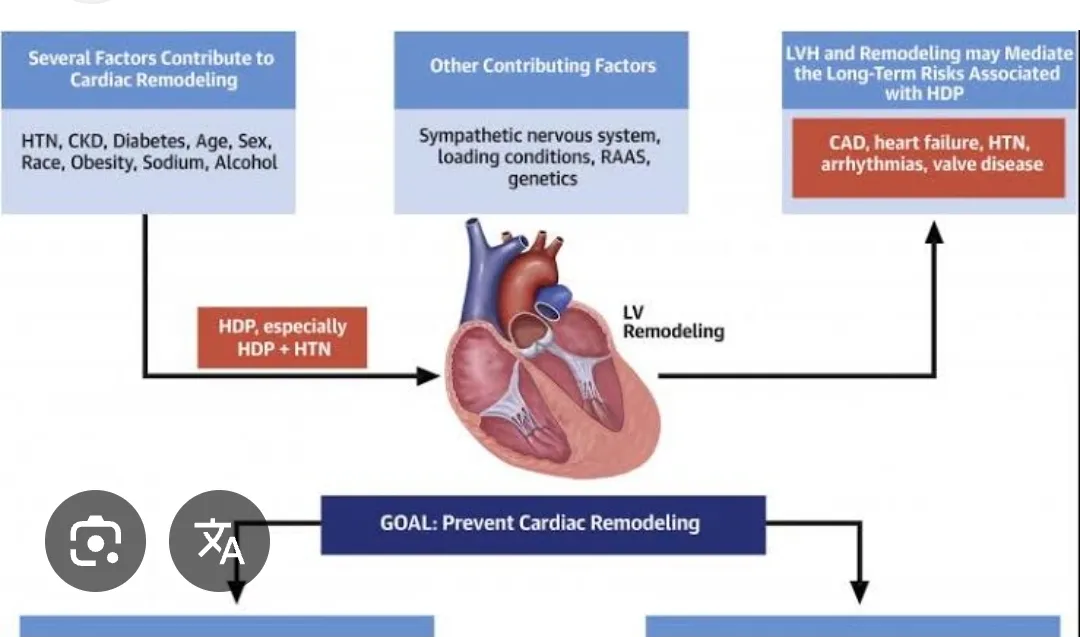
These changes are normal but can worsen preexisting heart conditions or cause issues like:
Peripartum cardiomyopathy (rare)
Exacerbation of congenital or valvular heart disease
New onset of arrhythmias
Keywords