Gestational Diabetes Mellitus (GDM) is a type of diabetes that develops during pregnancy, typically in the second or third trimester, and usually disappears after giving birth. It affects how your body processes glucose (sugar), leading to high blood sugar levels that can impact both the mother and the baby.
🧬 Causes
Hormonal changes in pregnancy can make cells less responsive to insulin (insulin resistance).
The pancreas compensates by producing more insulin, but in GDM, it's not enough to maintain normal blood sugar levels.
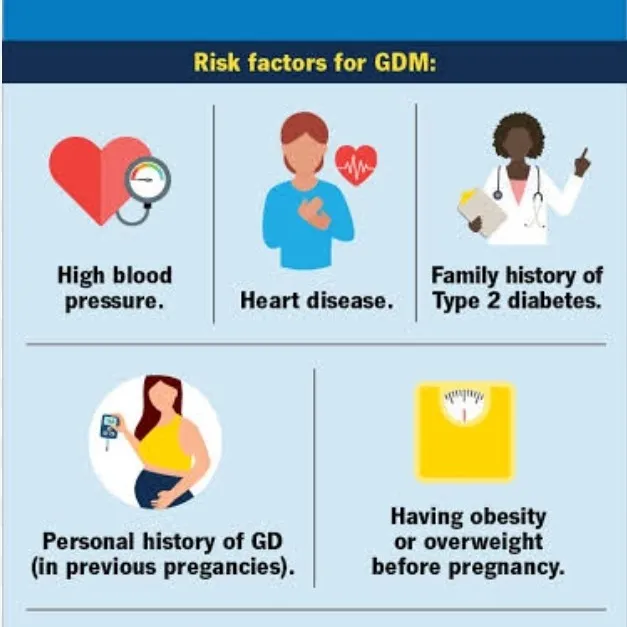
⚠️ Risk Factors
Overweight or obese before pregnancy
Family history of diabetes
Previous gestational diabetes or large baby (macrosomia)
Polycystic ovary syndrome (PCOS)
Age over 25
Certain ethnic backgrounds (e.g., South Asian, African-Caribbean, Hispanic, Native American)
🩺 Symptoms
GDM often doesn’t cause noticeable symptoms, but possible signs include:
Increased thirst
Frequent urination
Fatigue
Blurred vision
Since symptoms are often mild or absent, screening between 24-28 weeks of pregnancy is standard.
🧪 Diagnosis
Glucose Challenge Test (GCT) – Screening test
Oral Glucose Tolerance Test (OGTT) – Diagnostic test if GCT is abnormal
⚕️ Management
The goal is to keep blood sugar levels within a normal range to avoid complications.
✅ Lifestyle Changes
Diet: Low glycemic index foods, balanced meals
Exercise: Regular moderate activity (e.g., walking, swimming)
💊 Medications
Insulin: If lifestyle changes are insufficient
Oral medications (e.g., metformin): Sometimes used
📈 Monitoring
Frequent blood glucose monitoring (often 4x/day)
👶 Possible Complications
For Baby
Macrosomia (large baby)
Preterm birth
Low blood sugar after birth
Increased risk of obesity and type 2 diabetes later in life
For Mother
Preeclampsia
Increased risk of cesarean delivery
Higher risk of developing type 2 diabetes in the future
🍼 After Birth
GDM usually resolves after delivery.
Blood sugar is monitored postpartum to ensure it returns to normal.
Follow-up glucose testing 6–12 weeks postpartum is recommended.
🧭 Long-term Outlook
Up to 50% of women with GDM develop type 2 diabetes within 10 years.
Lifestyle changes after pregnancy can significantly reduce this risk.
Keywords