False labour vs true labour is an important distinction in Obstetrics, especially toward the end of pregnancy.
🔹 True Labour
This is the real onset of childbirth.
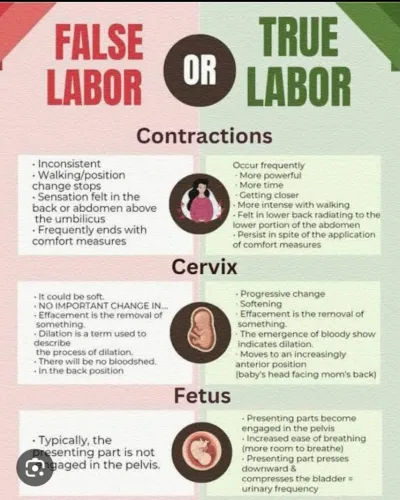
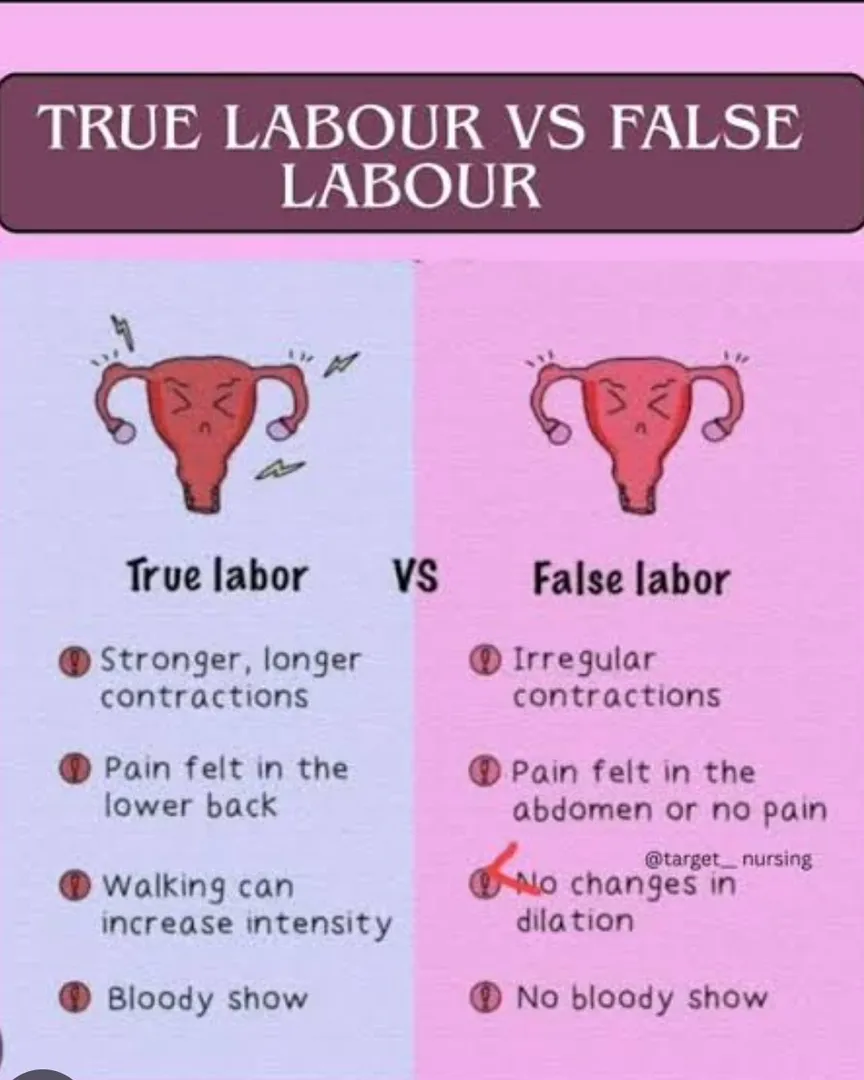
Contractions: Regular, strong, and increase in intensity and frequency
Pain pattern: Starts in the back and radiates to the front (abdomen)
Cervical changes: The cervix dilates (opens) and effaces (thins)
Activity effect: Contractions continue or get stronger even if you walk or rest
Show/water breaking: May have bloody discharge (“show”) or rupture of membranes
👉 These contractions lead to delivery of the baby.
🔹 False Labour (Braxton Hicks contractions)
These are practice contractions and not actual labour.
Contractions: Irregular, usually weak, and do not get closer together
Pain pattern: Mostly felt in the front of the abdomen
Cervical changes: No dilation or effacement
Activity effect: Often stop with rest, hydration, or change in position
No show or water breaking
👉 They prepare the uterus but don’t lead to childbirth.
🔑 Quick Comparison
Feature True Labour False Labour
Regularity Regular Irregular
Intensity Increasing Same or decreasing
Cervical change Yes No
Relief with rest No Yes
Outcome Leads to delivery No deliv
Keywords