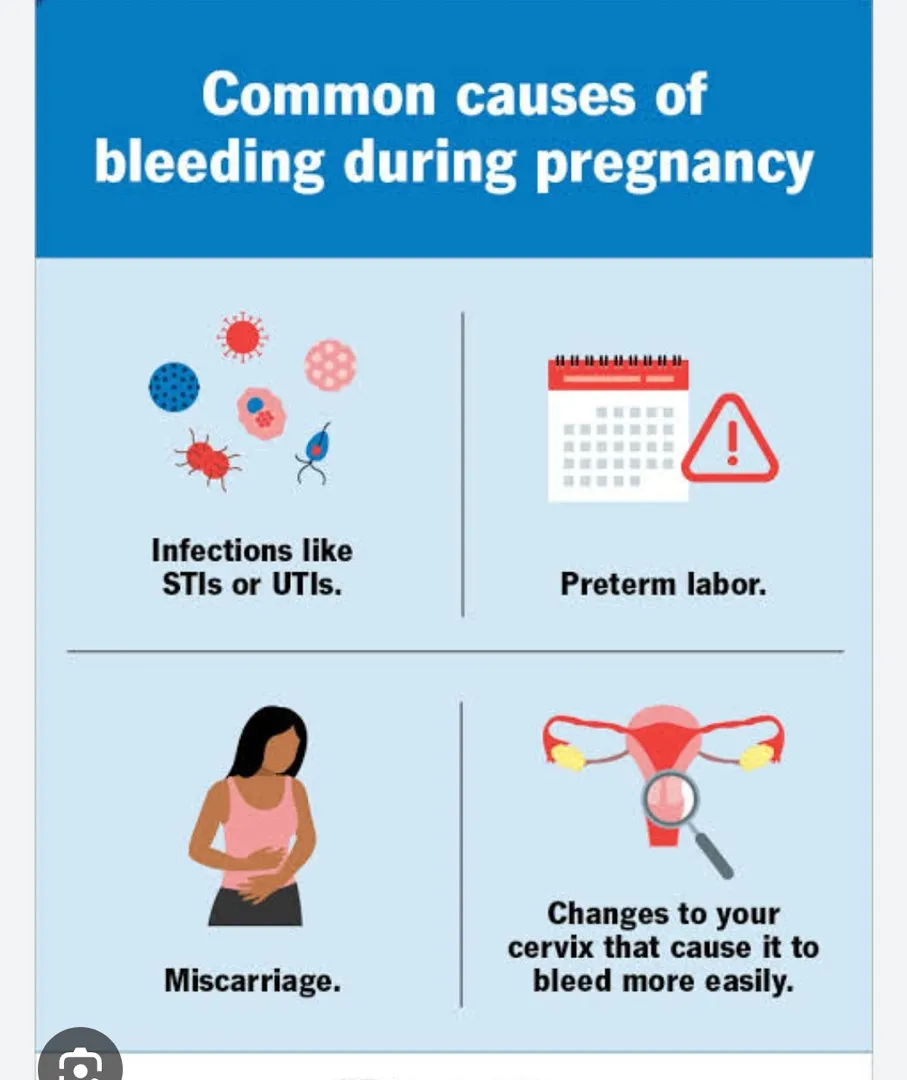
Bleeding during the first trimester of pregnancy (weeks 1–12) is relatively common and can have several causes—some benign, others more serious. Here’s a breakdown:
✅ Common & Often Non-Serious Causes
1. Implantation Bleeding
Timing: Around 6–12 days after conception.
Description: Light spotting, pink or brown, lasts a day or two.
Cause: Embryo attaching to the uterine lining.
2. Cervical Irritation
Cause: Increased blood flow to the cervix during pregnancy.
Triggers: Intercourse, pelvic exam, or infection.
Bleeding: Light spotting, often after activity.
3. Subchorionic Hemorrhage
Description: Bleeding between the uterine wall and the chorion (early placenta).
Common: Often resolves on its own, but requires monitoring.
Symptoms: May cause light to moderate bleeding or spotting.
⚠️ More Serious Causes (Require Medical Attention)
4. Miscarriage (Spontaneous Abortion)
Symptoms: Vaginal bleeding (light to heavy), cramping, tissue passage, lower back pain.
Timing: Often occurs before 12 weeks.
Note: Not all bleeding results in miscarriage, but any bleeding should be evaluated.
5. Ectopic Pregnancy
Description: Fertilized egg implants outside the uterus, usually in a fallopian tube.
Symptoms: Sharp abdominal pain, shoulder pain, dizziness, heavy bleeding.
Urgency: Medical emergency—can be life-threatening if untreated.
6. Molar Pregnancy (Hydatidiform Mole)
Description: Abnormal growth of trophoblast tissue instead of a normal embryo.
Symptoms: Dark brown or grape-like discharge, nausea, rapid uterine growth.
Note: Rare, but serious and needs prompt treatment.
Keywords