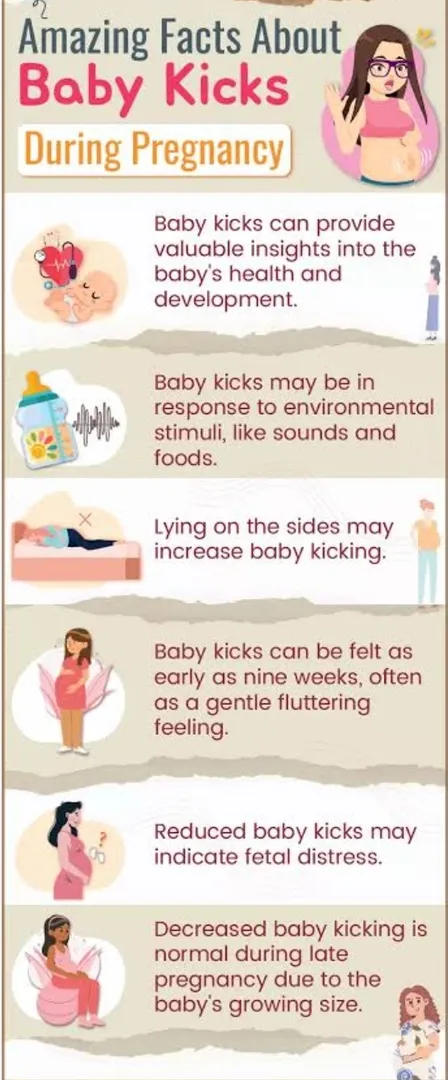
Feeling (or "perceiving") baby movements during pregnancy is a significant milestone for expecting parents. It is medically known as "quickening" and provides reassurance of the baby's health and development.
👶 Baby Movements Perception in Pregnancy
🕐 When Does It Start?
First-time moms (primigravida): Usually around 18–22 weeks.
Second-time (or more) moms (multigravida): Can be as early as 16 weeks.
Thin women or those who are very attuned to their bodies may notice it earlier.
📌 What Do Movements Feel Like?
Early movements may feel like:
Fluttering
Bubbles or gas
Light tapping
Gentle swishing
Later in pregnancy, movements become stronger and more recognizable: kicks, jabs, rolls, or stretches.
🔄 How Often Should You Feel the Baby Move?
Before 28 weeks: Movements may be irregular.
After 28 weeks: Movements become more predictable and consistent.
Doctors often recommend counting kicks from 28 weeks onward, especially if there's concern about fetal well-being.
📋 Fetal Movement Count (Kick Counts)
One common method:
Pick a time when your baby is usually active (after a meal or in the evening).
Lie on your left side and count how long it takes to feel 10 movements.
Ideally, you should feel 10 movements within 2 hours.
If not, or if movements decrease significantly, contact your healthcare provider.
🚨 When to Be Concerned
No movements by 24 weeks → inform your doctor.
A sudden decrease or absence of movement in the third trimester.
Baby seems “sluggish” or weak compared to previous patterns.