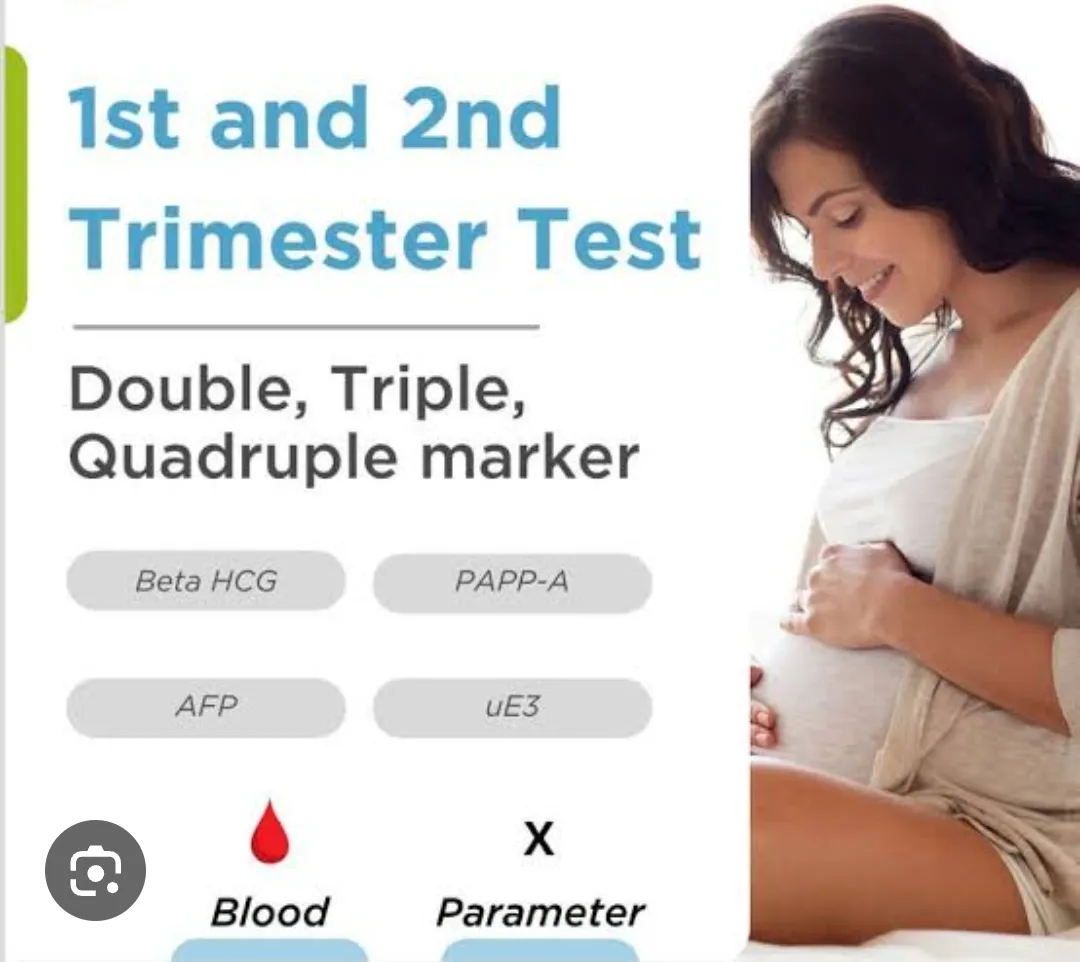
The double marker test, also known as the "dual marker test, " is a screening test typically performed during the first trimester of pregnancy, usually around 11 to 14 weeks. It measures the levels of two substances in the mother's blood:
Pregnancy-associated plasma protein-A (PAPP-A)
Free beta-human chorionic gonadotropin (β-hCG)
These markers are combined with the mother's age and other factors to assess the risk of the baby having certain chromosomal conditions, such as:
Down syndrome (Trisomy 21)
Trisomy 18
Neural tube defects
Importance of the Double Marker Test at 12 Weeks:
Early Detection of Risks:
The test helps in early identification of potential risks for chromosomal abnormalities, which can be crucial for early decision-making regarding further diagnostic testing or interventions.
Non-invasive:
Since it's a blood test, it doesn't pose any risk to the fetus, making it a safe screening tool for both mother and baby.
Guiding Further Testing:
If the test indicates a higher risk for conditions like Down syndrome, it may prompt further diagnostic tests like amniocentesis or CVS (chorionic villus sampling) for confirmation.
Timing and Accuracy:
Performing the test around 12 weeks is important for optimal accuracy, as this is when the markers (PAPP-A and β-hCG) provide the most relevant data for detecting abnormalities.
Assessing Fetal Well-being:
In addition to chromosomal abnormalities, abnormal levels of these markers may indicate potential issues with fetal development, such as growth problems or an increased risk of miscarriage.
Pregnancy-associated plasma protein-A (PAPP-A)
Free beta-human chorionic gonadotropin (β-hCG)
These markers are combined with the mother's age and other factors to assess the risk of the baby having certain chromosomal conditions, such as:
Down syndrome (Trisomy 21)
Trisomy 18
Neural tube defects
Importance of the Double Marker Test at 12 Weeks:
Early Detection of Risks:
The test helps in early identification of potential risks for chromosomal abnormalities, which can be crucial for early decision-making regarding further diagnostic testing or interventions.
Non-invasive:
Since it's a blood test, it doesn't pose any risk to the fetus, making it a safe screening tool for both mother and baby.
Guiding Further Testing:
If the test indicates a higher risk for conditions like Down syndrome, it may prompt further diagnostic tests like amniocentesis or CVS (chorionic villus sampling) for confirmation.
Timing and Accuracy:
Performing the test around 12 weeks is important for optimal accuracy, as this is when the markers (PAPP-A and β-hCG) provide the most relevant data for detecting abnormalities.
Assessing Fetal Well-being:
In addition to chromosomal abnormalities, abnormal levels of these markers may indicate potential issues with fetal development, such as growth problems or an increased risk of miscarriage.
Keywords