Vaginal infections are relatively common during pregnancy due to hormonal and physiological changes that affect the vaginal environment. It's important to identify and treat them appropriately, as some infections can pose risks to both the mother and the baby.
Common Vaginal Infections in Pregnancy
Yeast Infection (Candidiasis)
Cause: Overgrowth of Candida fungus.
Symptoms: Itching, thick white discharge (like cottage cheese), redness, swelling.
Risks: Usually not harmful to the baby but can cause discomfort.
Treatment: Antifungal creams or suppositories (e.g., clotrimazole); oral antifungals like fluconazole are typically avoided during pregnancy.
Bacterial Vaginosis (BV)
Cause: Imbalance in vaginal bacteria.
Symptoms: Thin, grayish discharge with a fishy odor, itching, or burning.
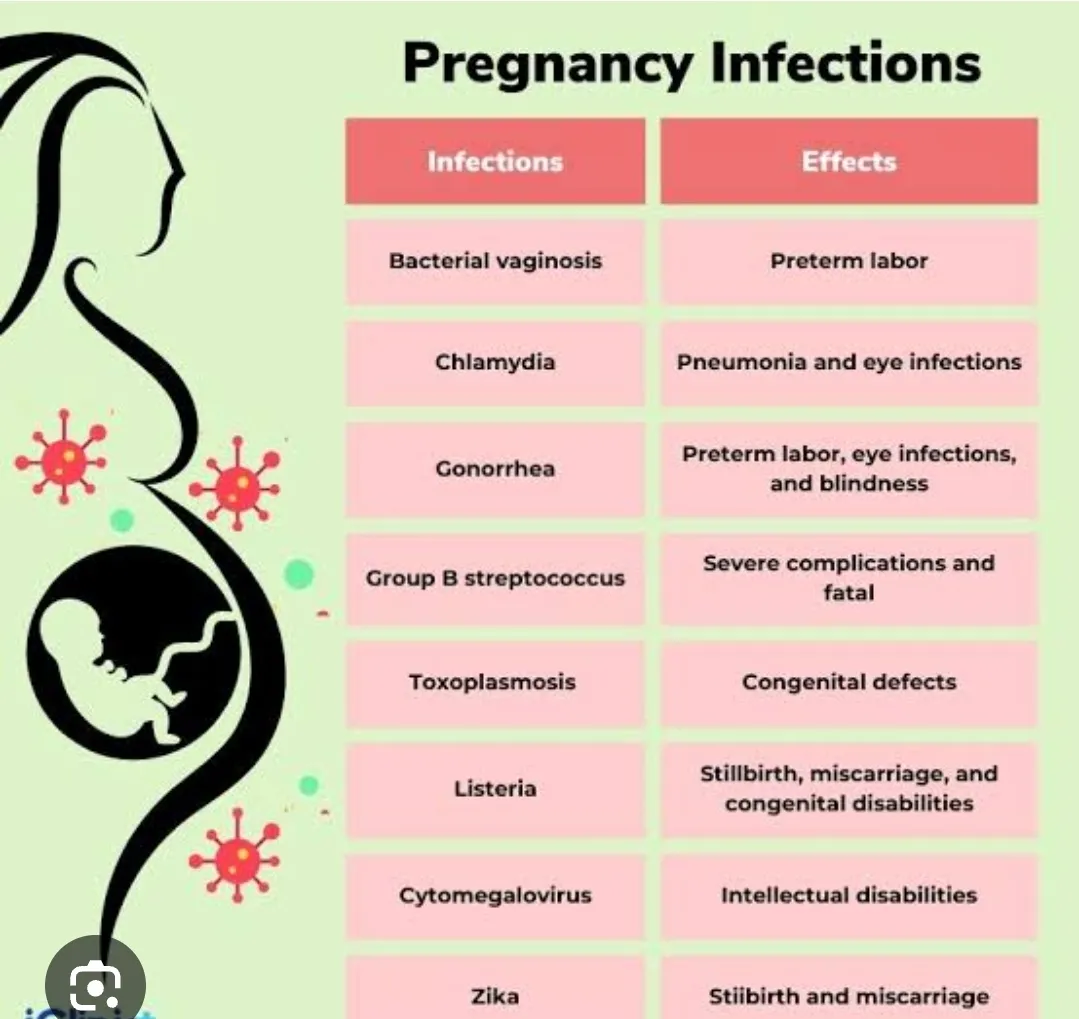
Risks: Increased risk of preterm labor, low birth weight, or infections after delivery.
Treatment: Antibiotics (e.g., metronidazole or clindamycin), usually oral.
Trichomoniasis
Cause: A sexually transmitted parasite (Trichomonas vaginalis).
Symptoms: Frothy, yellow-green discharge, bad odor, itching, and irritation.
Risks: Preterm delivery, low birth weight, transmission during birth.
Treatment: Oral metronidazole (safe in pregnancy, typically given in a single dose).
Group B Streptococcus (GBS)
Cause: Bacterial colonization (not a typical infection).
Symptoms: Often asymptomatic in the mother.
Risks: Can be passed to the baby during labor and cause serious infections.
Treatment: Antibiotics (e.g., penicillin) during labor if GBS-positive.
Prevention and Management
Maintain good hygiene.
Avoid douching or using scented vaginal products.
Wear breathable, cotton underwear.
Treat infections promptly with pregnancy-safe medications.
Keywords