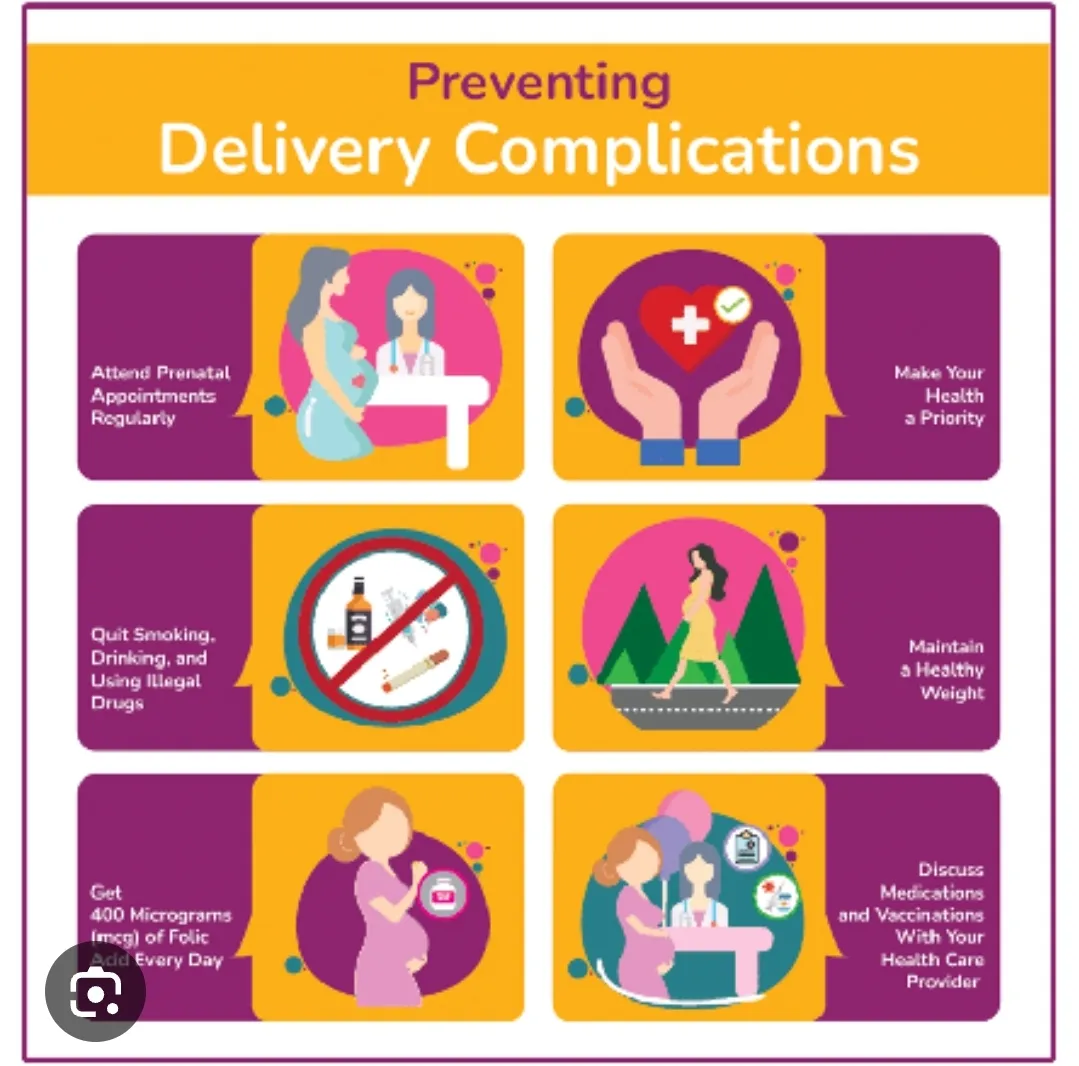
Vaginal delivery is a natural process, but like any medical event, it can be associated with complications. While many births are uncomplicated, here are common and potentially serious complications that may arise during or after vaginal delivery:
1. Labor and Delivery Complications
a. Prolonged Labor (Failure to Progress)
Labor that lasts too long (especially during the active phase)
Causes: large baby, weak contractions, abnormal fetal position
May require interventions like oxytocin or C-section
b. Fetal Distress
Signs the baby isn't doing well (e.g., abnormal heart rate)
Causes: umbilical cord problems, poor oxygenation, placental issues
May require immediate delivery
c. Shoulder Dystocia
Baby’s shoulders get stuck after the head is delivered
Emergency situation; risk of injury to baby or mother
d. Umbilical Cord Prolapse
Cord slips into the birth canal ahead of the baby
Can cut off oxygen to the baby — requires emergency delivery
2. Maternal Complications
a. Vaginal or Perineal Tears
Common, especially in first-time births
Degrees of severity:
1st and 2nd degree: minor, may need stitches
3rd and 4th degree: extend into anal sphincter/rectum — more serious
b. Postpartum Hemorrhage (PPH)
Excessive bleeding after delivery
Causes: uterine atony, retained placenta, lacerations
May require medications, transfusions, or surgery
c. Infection
Endometritis (uterine infection), wound infection, or urinary tract infection
More common with prolonged labor or after manual placenta removal
d. Uterine Rupture
Rare, but life-threatening — usually in women with previous C-section
Emergency C-section required
3. Neonatal Complications
a. Birth Asphyxia
Lack of oxygen before, during, or just after birth
Can lead to brain damage (e.g., cerebral palsy) if severe
b. Meconium Aspiration Syndrome
Baby inhales meconium-stained amniotic fluid
Can cause breathing problems
c. Birth Injuries
From use of forceps/vacuum or difficult delivery
Examples: clavicle fracture, brachial plexus injury
4. Instrumental Delivery Risks (Forceps or Vacuum)
Increased risk of perineal tears or trauma
Baby may experience:
Scalp swelling or bruising
Facial nerve injury (rare)
5. Retained Placenta
Placenta does not deliver within 30 minutes
Increases risk of hemorrhage and infection
May require manual removal
6. Amniotic Fluid Embolism (Rare but Severe)
Amniotic fluid enters maternal bloodstream
Can cause severe allergic-like reaction: shock, respiratory failure
Keywords