Breastfeeding is the process of feeding an infant or young child with milk directly from the mother's breast. It's a natural way to provide essential nutrients, immune protection, and bonding between a mother and her baby. Here's an overview of the key points:
Benefits of Breastfeeding
For the Baby:
Optimal nutrition: Breast milk contains the right balance of nutrients, antibodies, and hormones.
Immunity boost: Helps protect against infections and diseases (e.g., ear infections, respiratory illnesses, diarrhea).
Brain development: Associated with higher IQ scores and cognitive development.
Lower risk: Reduces chances of SIDS (sudden infant death syndrome), allergies, obesity, and type 2 diabetes.
For the Mother:
Bonding: Encourages emotional connection and attachment.
Health benefits: Reduces postpartum bleeding, helps the uterus return to normal size, and may reduce the risk of breast and ovarian cancer.
Weight loss: Helps burn extra calories.
Convenience & cost-effective: No need for bottles or formula preparation.
Common Challenges
Latching difficulties
Sore or cracked nipples
Low milk supply
Engorgement or blocked ducts
Mastitis (breast infection)
These can often be resolved with the help of a lactation consultant, nurse, or midwife.
Tips for Successful Breastfeeding
Start early: Ideally within the first hour after birth.
Feed on demand: Watch for hunger cues (e.g., rooting, sucking on hands).
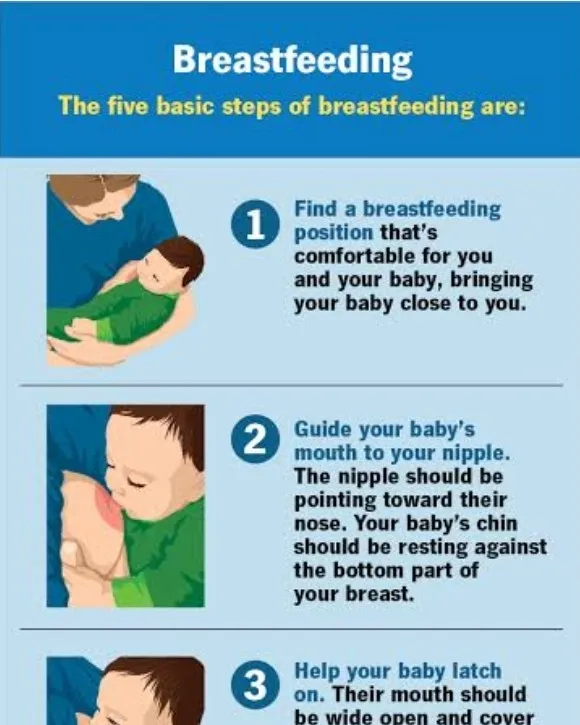
Ensure proper latch: Baby's mouth should cover both the nipple and part of the areola.
Stay hydrated and nourished: Your body needs extra fluids and nutrients.
Seek support: Join a breastfeeding support group or speak to a healthcare provider if needed.
Alternatives & Supplementing
Some mothers choose to pump breast milk, use donor milk, or combine breastfeeding with formula feeding for various reasons—medical, personal, or logistical. This is okay—what matters most is the baby’s health and that the feeding plan works for the family.
Keywords