Immunity in Pregnancy is a complex and finely tuned process. The immune system adapts during pregnancy to protect both the mother and the developing fetus. Here's a breakdown of the key points:
🔄 Immunological Changes in Pregnancy
Pregnancy is not a state of immune suppression, but rather immune modulation. The maternal immune system balances:
Tolerating the fetus (which is genetically different from the mother)
Maintaining defense against infections
1. Innate Immunity (First Line Defense)
Enhanced activity of some components (e.g., neutrophils, monocytes)
Increased inflammation in early and late pregnancy (helps with implantation and labor)
Changes in NK cell activity: Uterine NK cells help in placental development, not immune defense
2. Adaptive Immunity (Targeted Defense)
Shift from Th1 to Th2 dominance:
Th1 (cell-mediated) immunity is decreased (helps prevent rejection of fetus)
Th2 (antibody-mediated) immunity is enhanced
Regulatory T cells (Tregs) increase to promote fetal tolerance
🦠 Pregnancy & Susceptibility to Infections
Some infections are more severe during pregnancy due to immune adaptations:
Increased risk: Influenza, varicella, hepatitis E, listeriosis, malaria
TORCH infections (can cross placenta): Toxoplasma, Others (syphilis, VZV), Rubella, CMV, Herpes
🤰 Maternal Immunity Benefits for the Baby
Placental antibody transfer (mainly IgG) begins ~13 weeks, peaks in 3rd trimester
Breastfeeding transfers secretory IgA, lactoferrin, lysozyme, immune cells
💉 Vaccination in Pregnancy
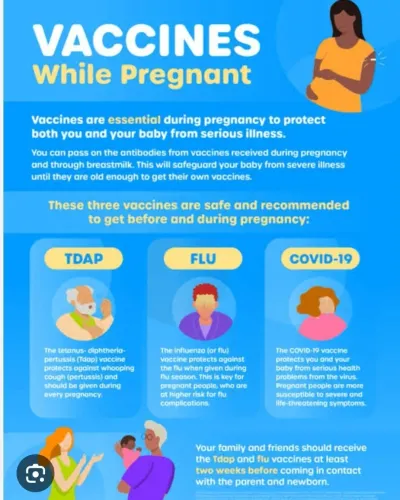
Safe and recommended vaccines:
Inactivated influenza vaccine
Tdap (Tetanus, Diphtheria, Pertussis): ideally in 3rd trimester
COVID-19 vaccine (recommended for most pregnant people)
Avoid live vaccines (e.g., MMR, varicella) during pregnancy.
🧠 Summary
Aspect Change During Pregnancy
Innate Immunity ↑ Activity
Adaptive Immunity ↓ Th1, ↑ Th2, ↑ Tregs
Susceptibility ↑ to certain infections
Antibody Transfer IgG crosses placenta
Vaccination Some vaccines safe, others contraindicated
Keywords